

Restaurant Kitchen Safety Code Compliance Checklist
Table of Contents
- What a Restaurant Kitchen Safety Code Compliance Checklist Covers
- OSHA Commercial Kitchen Safety Standards: The Federal Floor
- Commercial Kitchen Fire Safety Requirements: NFPA 96 and Suppression Systems
- Restaurant Health Inspection Checklist: What Inspectors Actually Score
- Kitchen Equipment Maintenance Schedule: What to Check Daily, Weekly, and Quarterly
- Digital Record-Keeping and Post-Inspection Remediation
- Frequently Asked Questions
Last Updated: September 26, 2026
What a Restaurant Kitchen Safety Code Compliance Checklist Covers
A restaurant kitchen safety code compliance checklist is a structured document that walks your team through every health, fire, and safety requirement a commercial kitchen must meet. A restaurant kitchen safety code compliance checklist is a structured document that walks your team through every health, fire, and safety requirement a commercial kitchen must meet.

The Eight Zones Every Kitchen Checklist Should Address
A complete restaurant kitchen safety code compliance checklist covers eight distinct areas. Miss one and you leave a gap an inspector will find.
- Personal hygiene and handwashing, handwashing stations, glove use, employee health reporting
- Food storage and temperature control, refrigeration units, thermometer calibration, shelf life
- Cross-contamination prevention, food contact surfaces, cutting board separation, raw and ready-to-eat storage
- Kitchen sanitation and cleaning, daily cleaning schedules, sanitization logs, chemical storage
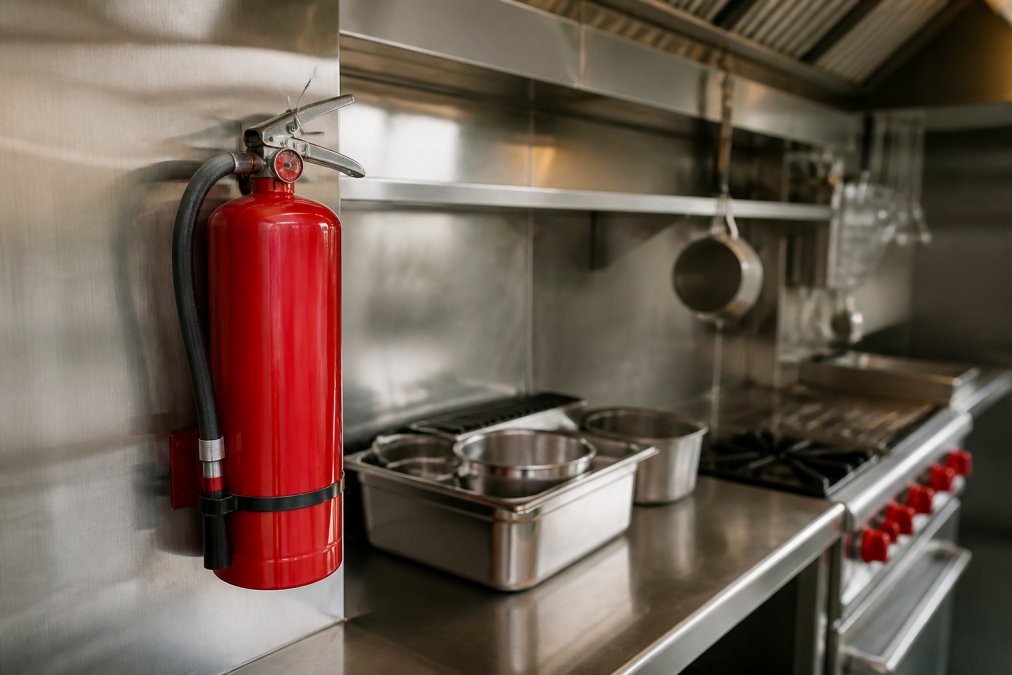
- Fire safety and suppression, fire suppression system, fire extinguishers, ventilation hoods
- Equipment maintenance and inspection, preventive schedules, calibration records, repair logs
- Waste management and disposal, grease traps, trash handling, documentation
- Pest control measures, pest exclusion, monitoring, corrective actions
OSHA Commercial Kitchen Safety Standards: The Federal Floor
OSHA commercial kitchen safety standards set the federal minimum for workplace safety. They cover slips, burns, cuts, chemical exposure, and electrical hazards, and they apply to every commercial kitchen regardless of size.
The Most Common OSHA Violations in Commercial Kitchens
The violations that show up most often are practical, not exotic:
- Blocked exits and obstructed walkways
- Missing or expired fire extinguisher inspections
- Wet floors without warning signs
- Improper chemical storage near food prep areas
- Unguarded slicers, grinders, and other moving equipment
- Missing personal protective equipment for chemical handling
Never store cleaning chemicals above or beside food prep surfaces. A single leak or spill can contaminate food contact surfaces and trigger an immediate citation, plus a mandatory disposal of any exposed product.
::: Maintaining strict separation between sanitation supplies and ingredients remains the most effective way to align your facility with current OSHA cleaning guidelines while preventing hazardous cross-contamination.
Commercial Kitchen Fire Safety Requirements: NFPA 96 and Suppression Systems
Commercial kitchen fire safety requirements center on NFPA 96, the standard governing ventilation control and fire protection for cooking operations. Every commercial kitchen with a hood system falls under it.
The core requirements break down into four areas:
| System | What It Covers | Inspection Frequency |
|---|---|---|
| Fire suppression system | Hood, duct, and appliance protection | Semiannual, or as required by the system and local code |
| Ventilation hoods | Grease filters, duct cleaning | Based on cooking volume and code |
| Fire extinguishers | Class K for cooking media | Monthly visual, annual professional service |
| Emergency egress | Exits, lighting, signage | Continuous |
Restaurant Health Inspection Checklist: What Inspectors Actually Score
A restaurant health inspection checklist scores your operation against the FDA Food Code and your local health department’s adopted version of it. Inspectors work from a weighted list, and some violations cost far more points than others. Understanding how points are assigned helps you prioritize where to focus your daily compliance efforts.
How Inspection Scoring Works
Most health departments use a demerit-based system where each violation carries a specific point value. Priority items, the ones tied directly to foodborne illness, carry the heaviest weight. These include:
- Priority items (typically 5 points each): Improper cooking temperatures, inadequate reheating, unsafe cooling practices, bare-hand contact with ready-to-eat food, and cross-contamination between raw and cooked foods.
- Priority foundation items (typically 3 points each): Missing or inaccurate temperature logs, improper sanitizer concentration, lack of proper handwashing facilities, and uncalibrated thermometers.
- Core items (typically 1-2 points each): General maintenance issues like dirty floors, missing ceiling tiles, or improper storage of single-service articles.
The Three Items That Decide Most Inspections
Temperature logs, food storage, and cross-contamination control are where most points are won or lost. Here’s what inspectors actually look for:
- Temperature logs: Cold holding at or below 41°F, hot holding at or above 135°F, with documented checks. Inspectors want to see a rhythm: opening, mid-shift, and closing checks, every day, in writing. A missing log is a priority foundation violation. An inaccurate log (e.g., recording 40°F when the actual temperature is 45°F) is a priority violation.
- Food storage: Raw proteins stored below and away from ready-to-eat foods, with clear date labeling. Inspectors check for proper hierarchy: raw poultry on the bottom, then raw ground meat, then raw whole cuts, then seafood, then ready-to-eat foods. Each level should be separated by at least one shelf or a physical barrier.
- Cross-contamination control: Separate cutting boards (color-coded is best practice), sanitized food contact surfaces, and no bare-hand contact with ready-to-eat food.
What Happens After the Inspection
If you receive a citation, you’ll typically be given a deadline to correct the violation. For priority items, this may be immediate (within 24 hours) or require a follow-up inspection. For core items, you might have up to 30 days. The inspector will provide a written report with the specific code sections violated. You must document your corrective actions and be prepared to show them during the next inspection or a re-check.
Keep a copy of your last inspection report in the kitchen manager’s office. Review it with your team within 48 hours to reinforce what went wrong and how it was fixed. This turns a negative event into a training opportunity.
Kitchen Equipment Maintenance Schedule: What to Check Daily, Weekly, and Quarterly
A kitchen equipment maintenance schedule keeps refrigeration units, slicers, and ventilation running and documented. Inspectors and auditors both ask for it, and most operators don’t have one.
Here’s a schedule that covers the essentials:
- Daily: Check refrigeration and freezer temperatures, clean slicer blades and food contact surfaces, verify thermometer calibration
- Weekly: Deep clean ventilation filters, inspect fire extinguishers, check grease trap levels
- Monthly: Test fire suppression system gauges, inspect pest exclusion points, review chemical storage
- Quarterly: Professional hood and duct cleaning, refrigeration coil cleaning, full equipment inspection
Digital Record-Keeping and Post-Inspection Remediation
Digital record-keeping replaces paper logs with timestamped, searchable records that hold up during an audit. Paper logs get lost, backfilled, or smudged. Digital ones don’t. But the real advantage goes beyond organization: digital systems enable real-time compliance monitoring, automated reminders, and a clear audit trail that inspectors trust.
Why Digital Beats Paper
Digital record-keeping replaces paper logs with timestamped, searchable records that hold up during an audit. Paper logs get lost, backfilled, or smudged. Digital ones don’t. But the real advantage goes beyond organization: digital systems enable real-time compliance monitoring, automated reminders, and a clear audit trail that inspectors trust.
- Backfilling:
- Lost records:
- No analytics:
Post-Inspection Remediation: The Corrective Action Plan
When an inspector writes a citation, you need a documented corrective action, not just a fix. A corrective action plan (CAP) is a formal document that outlines the violation, the root cause, the steps taken to correct it, and how you’ll prevent recurrence.
Here’s a simple CAP workflow:
- Log the violation and its code reference: Note the exact FDA Food Code section or local code citation. This shows you understand the regulatory basis.
- Assign an owner and a deadline: Someone must be accountable for the fix. Set a realistic deadline based on the violation’s severity.
- Document the corrective action with photos: Before-and-after photos are powerful evidence. For example, if the violation was improper chemical storage, show the chemicals moved to a designated area away from food.
- Verify the fix with a follow-up check: Have a manager or supervisor confirm the correction within 24-48 hours. Document that verification.
- File everything where the next inspector can find it: Keep a dedicated compliance binder with all inspection reports, CAPs, and follow-up documentation.
Staff Accountability Frameworks
Checklists only work if someone owns them. Assign each of the eight zones to a named person. That person is responsible for daily checks, logging issues, and reporting to the kitchen manager. Review logs weekly in a brief team meeting. Tie completion to performance reviews, not as a punitive measure but as a recognized part of their job.
Digital record-keeping and a formal corrective action plan turn a citation into a manageable process. The goal isn’t just to pass the next inspection, it’s to build a system that prevents violations in the first place.
Frequently Asked Questions
What are the most common OSHA violations in commercial kitchens?
The most frequent OSHA citations in commercial kitchens involve slip and fall hazards from wet floors, improper chemical storage, missing personal protective equipment, blocked fire exits, and inadequate employee training on hazardous materials. Electrical hazards from damaged cords and overloaded outlets also appear regularly. Under OSHA commercial kitchen safety standards, employers must provide a workplace free from recognized hazards, maintain documentation of safety training, and post required OSHA notices where employees can see them. Regular self-audits using a kitchen safety code checklist help catch these issues before an inspector does.
How often should a restaurant conduct a self-inspection for safety compliance?
Daily walkthroughs should cover high-risk items like handwashing stations, temperature logs, and food contact surfaces. A full restaurant health inspection checklist review should happen weekly, covering storage areas, chemical storage, and pest exclusion. Quarterly deep audits should examine ventilation hoods, fire suppression systems, refrigeration units, and equipment maintenance records. After any health code violation or inspection report, run an immediate corrective action review. Documenting every self-inspection builds audit readiness and demonstrates a functioning food safety management system to regulators.
What documentation is required for health department kitchen inspections?
Health departments typically require temperature logs for refrigeration units and hot holding, employee training records, a current food safety manager certification, cleaning and sanitization schedules, pest control service reports, and proof of thermometer calibration. Fire safety documentation, including fire suppression system inspection tags and fire extinguisher service records, is also commonly reviewed. Keeping all documentation organized and accessible, whether in a binder or a digital compliance platform, speeds up the inspection and shows the inspector that your operation takes regulatory compliance seriously.
How does proper kitchen layout design impact safety code compliance?
Kitchen layout directly affects compliance with handwashing station placement, cross-contamination prevention between raw and ready-to-eat prep areas, ventilation hood coverage over cooking equipment, and emergency egress width. A well-designed commercial kitchen separates raw protein prep from salad and cold stations, positions handwashing sinks within reach of every work zone, and routes waste disposal away from food contact surfaces. Layout mistakes are expensive to fix after construction, so involving a restaurant architect during the design phase prevents code violations that would otherwise require costly remediation.
What are the mandatory fire safety requirements for commercial cooking equipment?
Commercial kitchen fire safety requirements include a Type I or Type II ventilation hood over cooking equipment, an automatic fire suppression system tied to the hood, manual pull stations at exits, and Class K fire extinguishers within 30 feet of cooking appliances. NFPA 96 requires suppression system inspections every six months and hood cleaning based on cooking volume, ranging from monthly for high-volume charbroiling to annually for light use. Fire extinguishers need monthly visual checks and annual professional servicing. All inspection tags must be current and visible.